1.Fundamentals and Types of Polymerization Catalysts
Polymerization catalysts play a crucial role in the field of polymer chemistry. These catalysts promote the chemical reactions that link small molecules called monomers to form polymers. Thanks to the action of polymerization catalysts, many materials essential to our daily lives—such as plastics and synthetic rubber—are produced.
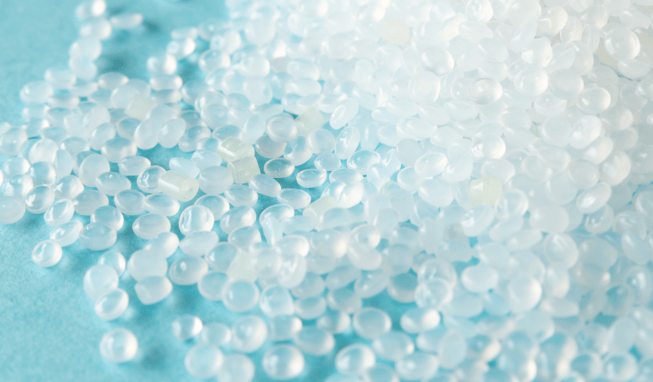
There are various types of polymerization catalysts, each suited to the production of specific polymers. Representative examples include Ziegler–Natta catalysts, metallocene catalysts, Phillips catalysts, and radical polymerization catalysts. These catalysts are used in the manufacture of a wide range of polymers, including polyethylene, polypropylene, acrylic resins, and PVC.
The importance of polymerization catalysts lies in their multifaceted benefits. They significantly accelerate polymerization reactions, improving production efficiency. They also enable the selective synthesis of polymers with specific structures and properties, resulting in high‑quality products. Furthermore, the use of catalysts reduces the energy required for reactions, contributing to lower environmental impact.
2.Relationship Between Polymerization Catalysts and Polymer Products
Polymerization catalysts play a central role in the manufacturing process of polymer products. These catalysts influence a wide range of polymer properties, including molecular weight and molecular‑weight distribution, crystallinity and amorphousness, stereoregularity (tacticity), the composition and structure of copolymers, and the degree of branching. Such characteristics directly affect the mechanical strength, heat resistance, transparency, and processability of the final products [1].
Selecting an appropriate polymerization catalyst is crucial for achieving the desired properties of the target polymer product. When choosing a catalyst, several factors must be considered comprehensively: the type and characteristics of the intended polymer, reaction conditions such as temperature and pressure, the activity and selectivity of the catalyst, cost efficiency, and environmental impact. By carefully evaluating these elements and selecting the optimal catalyst, high‑quality polymer products can be produced efficiently.
3.History and Technological Innovation of Polymerization Catalysts
The history of polymerization catalysts dates to the 1950s. In 1953, German scientist Karl Ziegler and Italian scientist Giulio Natta independently developed catalyst systems combining alkylaluminum compounds with titanium compounds. These catalysts later became known as Ziegler–Natta catalysts and revolutionized the field of polyolefin polymerization.
Following this breakthrough, polymerization catalyst technology advanced rapidly. In the 1980s, metallocene catalysts emerged, enabling far more precise control over polymerization. In the 1990s, the development of late‑transition‑metal catalysts made it possible to copolymerize olefins with polar monomers using single‑site catalysts [2].
Modern polymerization catalyst technology continues to pursue higher levels of control and efficiency. Research is progressing in nanoscale catalyst design and environmentally friendly catalytic processes. Innovative approaches are also being explored, such as developing new catalyst systems for bio‑based polymers and applying computational chemistry to catalyst design. These efforts are expected to lead to the creation of more sustainable and higher‑performance polymer products.
4.Metallocene Catalysts and MAO Technology
Metallocene catalysts, introduced in the 1980s, represent a groundbreaking class of polymerization catalysts. Their most distinctive feature is the presence of uniform catalytic active sites at the molecular level. This uniformity results in polymers with narrow molecular‑weight distributions and highly consistent properties. Compared with conventional Ziegler–Natta catalysts, metallocene catalysts exhibit remarkably high catalytic activity, contributing to improved production efficiency [3].
Methylaluminoxane (MAO) serves as an essential cocatalyst in metallocene catalyst systems. MAO activates metallocene catalysts and enables polymerization reactions to proceed efficiently. Although its chemical structure is complex and difficult to determine precisely, MAO is generally considered to consist of cyclic or linear compounds composed of repeating aluminum–oxygen units [4].
-1.png?width=759&height=428&name=%E9%87%8D%E5%90%88%E8%A7%A6%E5%AA%92%E3%81%AE%E9%80%B2%E5%8C%96%E3%81%A8%E6%9D%B1%E3%82%BD%E3%83%BC%E3%83%BB%E3%83%95%E3%82%A1%E3%82%A4%E3%83%B3%E3%82%B1%E3%83%A0%E3%81%AEMAO%E6%8A%80%E8%A1%93(%E8%8B%B1%E8%AA%9E%E7%89%88)-1.png)
Tosoh Finechem Corporation has earned global recognition for its MAO technology. The company’s strength lies in its ability to supply high‑purity, low‑impurity MAO with exceptional consistency. Backed by decades of research, development, and manufacturing experience, Tosoh Finechem possesses deep technical expertise that supports product development and quality control.
Tosoh Finechem’s MAO technology is applied across a wide range of fields, including the production of high‑performance polyolefins, research and development of polymers with novel properties, studies of new catalyst systems in academic and industrial laboratories, and the use of MAO as a precursor for advanced functional materials.
For more details about our MAO products, please click here.
Click here for the related product (TMAL).
5.Tosoh Finechem’s Global Expansion
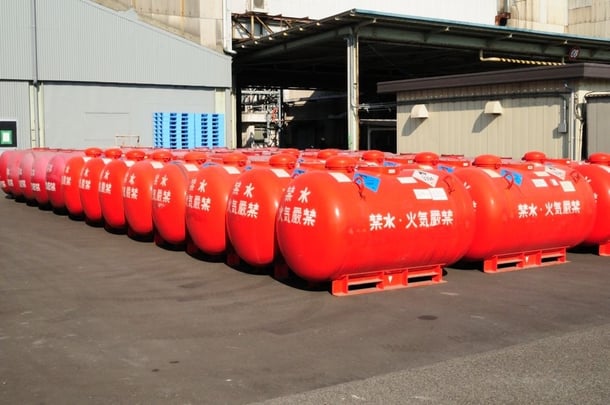
Tosoh Finechem operates manufacturing facilities in Japan while maintaining a global supply framework. At its domestic production sites, the company manufactures MAO and a variety of other chemical products under rigorous quality‑control standards.
To meet international demand, Tosoh Finechem has established a robust supply system that enables it to deliver products of the same high quality as those produced in Japan to customers worldwide. Tosoh Finechem has earned strong trust by ensuring stable, reliable supply to overseas markets. In addition, the company leverages a global logistics network to provide fast and dependable product delivery. By complying with regional regulations and requirements, Tosoh Finechem continues to strengthen its competitiveness in the global marketplace.
References
[1]Okada, A. Polymer Synthesis and Modification of Polymers.
High Polymers, Japan: Polymers 1974, 23, 112–118.
https://doi.org/10.1295/kobunshi.23.112 (accessed 2026-01-28).
[2]Xin, B. S.; Sato, N.; Tanna, A.; Oishi, Y.; Konishi, Y.; Shimizu,
F. A Study on the Copolymerization of Ethylene and Polar Monomers.
Japanese Journal of Polymer Science and Technology 2018, 75, 515–526.
https://doi.org/10.1295/koron.2018-0032 (accessed 2026-01-28).
[3]Tsutui, T.; Tohi, Y. High Performance Olefin Polymerization Catalysts.
High Polymers, Japan: Polymers 2003, 52, 255–257, 262.
https://doi.org/10.1295/kobunshi.52.255 (accessed 2026-01-28).
[4]Luo, L.; Younker, J. M.; Zabula,
A. V. Structure of Methylaluminoxane (MAO): Extractable [Al(CH₃)₂]⁺
for Precatalyst Activation. Science 2024, 384 (6703), 1424–1428.
https://doi.org/10.1126/science.adm7305 (accessed 2026-01-28).
- SHARE

- Tweet
